
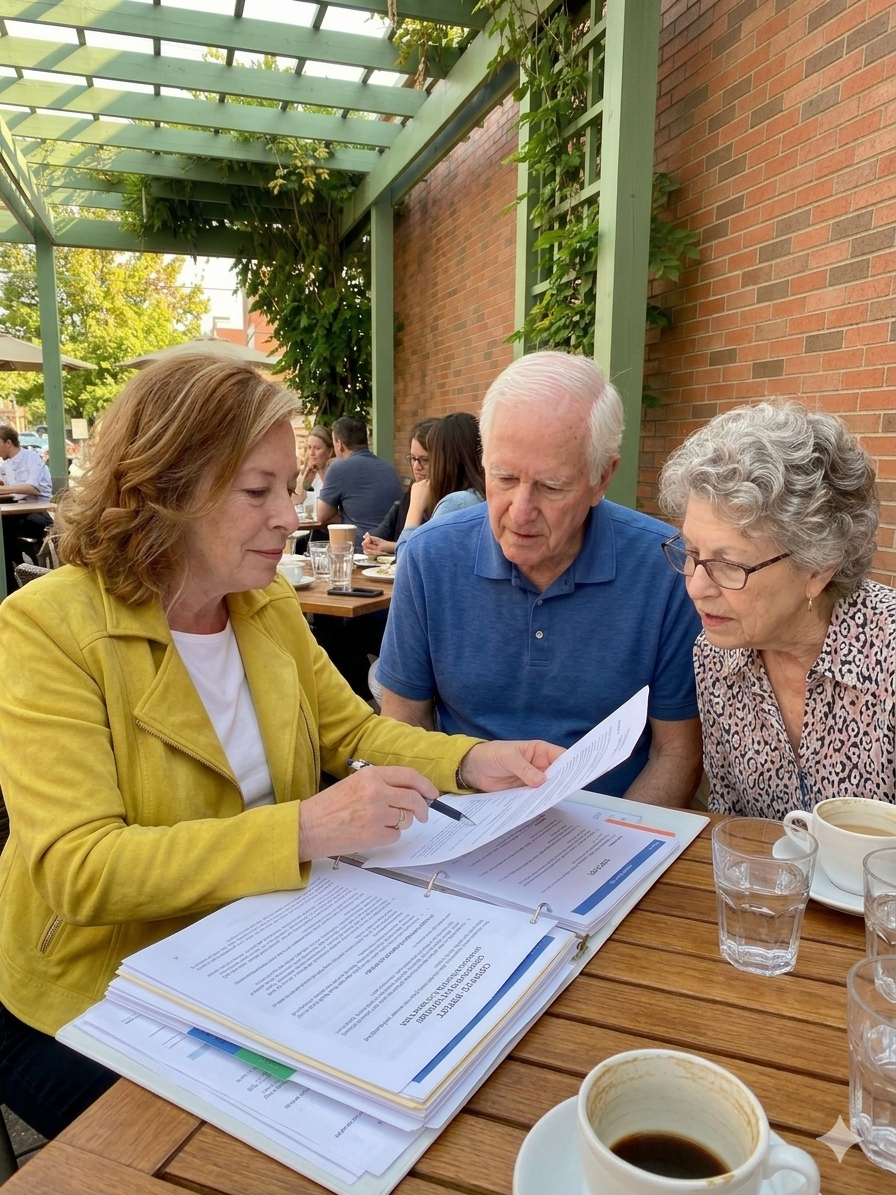
How to Find the Right Real Estate Agent for a Senior: Answers to the Questions Everyone is Asking
May 29, 2026 · by Lisa Macheca
Work with a Senior Specialist who knows the ins and outs of downsizing and creating the next chapter.
How to Find the Right Real Estate Agent for a Senior: Answers to the Questions Everyone Is Asking
By Lisa Macheca | Keller Williams Realty | clutter2close.com
You've done the hard part — you've decided it's time. Maybe the house is too big, the stairs are getting harder, or the goal is simply to free up money and simplify life. Whatever the reason, the next question most seniors (and their families) ask is the same:
How do I find a real estate agent I can actually trust with this?
It's not a small question. Selling a longtime family home is one of the most emotionally and financially significant decisions a person can make. The right agent can make it feel manageable. The wrong one can make it feel like a nightmare. Here's everything you need to know to choose wisely.
"Do I really need a specialist, or can any agent help?"
Any licensed agent can technically list a home. But seniors navigating a major life transition — downsizing, moving to assisted living, selling a home they've owned for 30+ years — have needs that go well beyond a standard transaction.
The right agent understands the emotional weight of the process, has patience built into their approach, knows how to coordinate estate sales and senior move managers, and can connect you with resources that make the physical and logistical side of downsizing manageable. A generalist who primarily works with young buyers and sellers may simply not have the bandwidth or the network to support that.
The short answer: you don't require a specialist, but you should look for one.
"What is an SRES, and does it matter?"
SRES stands for Senior Real Estate Specialist — a designation offered through the National Association of REALTORS®. Agents who earn it complete specialized training on the financial, legal, and emotional considerations unique to older homeowners: things like understanding Medicare and Social Security implications of a sale, navigating IRA and pension assets, and working sensitively with clients who may be facing significant life changes.
Does the designation alone guarantee a great agent? No. But it does tell you the agent has sought out education specifically for this work, which is a meaningful signal. When comparing two otherwise equal agents, the SRES credential is worth weighing.
About their process:
How do you handle the downsizing side — do you have connections to estate sale companies, senior move managers, or organizers?
If the home needs work before listing, do you have a contractor network, or do you offer a concierge-style prep service?
What does your typical timeline look like from listing to closing?
About communication:
How often will you update me, and through what channel?
If I (or a family member) have questions, how quickly do you typically respond?
About money:
What is your commission, and what does it include?
Are your fees negotiable, and are there any additional costs I should know about?
A trustworthy agent will answer all of these directly and without defensiveness. Vague or evasive answers are a red flag.
"How do I know if an agent is a good personal fit?"
Chemistry matters more in senior real estate than in almost any other transaction. You want someone who:
Listens more than they talk in the first meeting
Doesn't rush you — emotionally or logistically
Explains things clearly without being condescending
Checks in proactively rather than waiting to be asked
Has a sense of humor — the process is stressful, and lightness helps
Interview at least three agents before making a decision. Pay attention to how they treat you in the consultation — that's a preview of how they'll treat you under pressure when a deal gets complicated.
"What should the agent's network look like?"
A great senior real estate agent isn't just a salesperson — they function more like a project coordinator. Their network should include:
Estate sale companies/Online Auctions to help liquidate belongings
Senior move managers who specialize in helping older adults physically transition
Contractors for pre-sale repairs and updates
Attorneys familiar with estate planning and real estate law
Financial advisors who understand how a sale interacts with retirement income and benefits
If an agent can only point you toward a for-sale sign and a lockbox, keep looking.
"How do I help an elderly parent through this if they're resistant?"
This is one of the most common and most delicate situations families face. A few things that help:
Let the parent lead the conversation about timing — pressure backfires.
Frame the sale around gain (freedom, simplicity, proximity to family) rather than loss.
Bring in the agent early as a neutral third party who can provide information without the emotional charge of family dynamics.
Give the parent a real role in the decisions — what to keep, where to move, what the home should sell for.
The right agent will know how to navigate this. Ask them directly: "Have you worked with families in this situation, and how do you handle it when a senior client is hesitant?"
"What's the difference between selling as-is versus preparing the home?"
Most longtime family homes need some level of preparation before hitting the market. The question is how much — and who manages it.
An agent experienced with senior sellers will give you an honest assessment: which improvements will actually move the needle on price, and which ones aren't worth the disruption. Some agents offer concierge programs where they front the cost of repairs and recoup it at closing, so sellers don't have to come out of pocket upfront. Ask whether that's available.
Selling as-is is also a legitimate option — particularly when the timeline is urgent or the property has significant deferred maintenance. A good agent will walk you through both scenarios with real numbers, not just a preference.
"How do I verify that an agent is who they say they are?"
Trust, but verify. Every licensed real estate agent in the U.S. is registered with their state's licensing board, and that information is publicly searchable online. You can confirm:
That their license is active
Whether any disciplinary actions have been filed
Beyond that, check Google reviews, Zillow reviews, and Realtor.com profiles. Look for reviews that specifically mention working with older clients or navigating sensitive transitions — those are the most relevant signal for your situation.
The Bottom Line
Finding the right real estate agent for a senior is about more than credentials and commission rates. It's about finding someone who understands that this isn't just a transaction — it's a life transition. Ask hard questions, interview more than one agent, and trust your instincts about how they make you feel in that first conversation.
The right person is out there. And when you find them, the whole process gets a lot easier.
Ready to Talk With Someone Who Gets It?
Lisa Macheca is a senior transition specialist with Keller Williams Realty who has built her entire practice around helping seniors and their families move from clutter to close — with clarity, compassion, and zero pressure.
Book a free consultation at clutter2close.com — Lisa will walk you through exactly what the process looks like for your situation, at your pace.
There's no obligation. Just a real conversation with someone who has done this many times and knows how to make it easier.
More on Downsizing

August 10, 2026
The Garage Sale Delusion: What Actually Sells (and What You'll Be Donating Anyway)

August 3, 2026
The Attic Isn't a Time Capsule: Where to Actually Start When Downsizing a Parent's Home

July 12, 2026
What It Really Takes to Help a Senior Downsize: Patience, Tenderness, and a Lot of Listening
Helping a family member through a transition?
A 20-minute conversation is enough to figure out the next step — and what you don't need yet.